
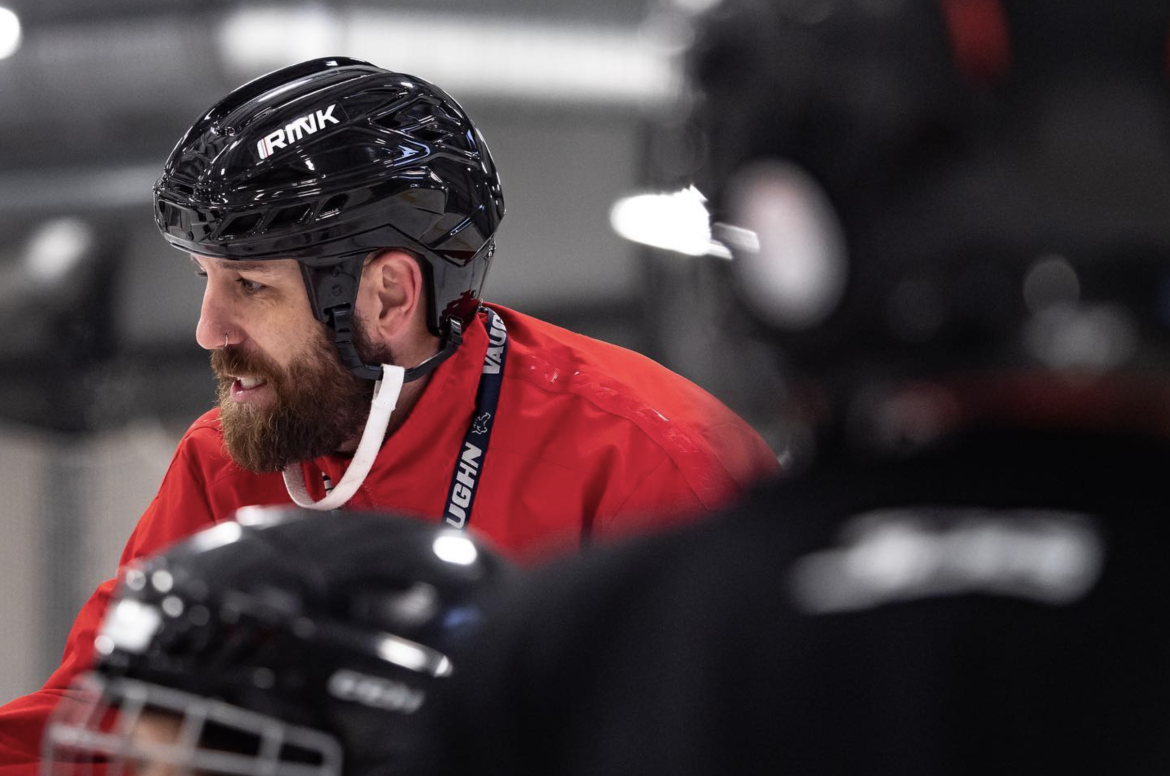
For RINK Winnipeg's player development coordinator Jarrett Oster, the No. 1 biggest thing that any young hockey player can do to improve their hockey playing abilities is to spend time working on their skating.
"The reality of it is, if you talk to any player, whether they're young or old, the first thing they're going to tell you is that they want to get faster," Oster told Game On. "A lot of good hockey players train a lot. So, they are usually pretty strong. But it's more of the deficiencies that tend to slow them down, right? So, we work with a lot of players that can get up to a fast rate of speed, but then slow themselves down, sometimes because they're riding on their inside edge a little too much."
An Unconventional Path to Coaching
Serving as the RINK's top power skating coach, Oster — once an SJHL star with the Yorkton Terriers — actually walked away from hockey for a good period of time, before finding himself drawn back to hockey as a form of work. His path to power skating coaching was far from ordinary.
"After a couple serious injuries ended my Junior career, I took some time off of hockey, backing away from the game altogether," he shared. "But after a number of years, I really started to get itch of being in the rinks again. You know, the cold, the smell of sweat, the exhaust fans... all that. As a matter of fact, I actually started off as the Zamboni guy for a couple of years and worked in maintenance around the rinks. Obviously, I had a background in hockey and was able to jump in and help out when other instructors were hurt or sick. I guess they liked what they saw, and I began taking some coaching courses. As the story goes, here I am today."
Now 44, Oster leads a number of different skating groups throughout the regular season and summer months, where he and fellow skating coaches Brooklyn Parker (figure skating) and Reece Derraugh (speed skating) instruct young hockey hopefuls looking to get an inside edge on their competition — pun most certainly intended.
Edge Engagement and the Power of the Glide
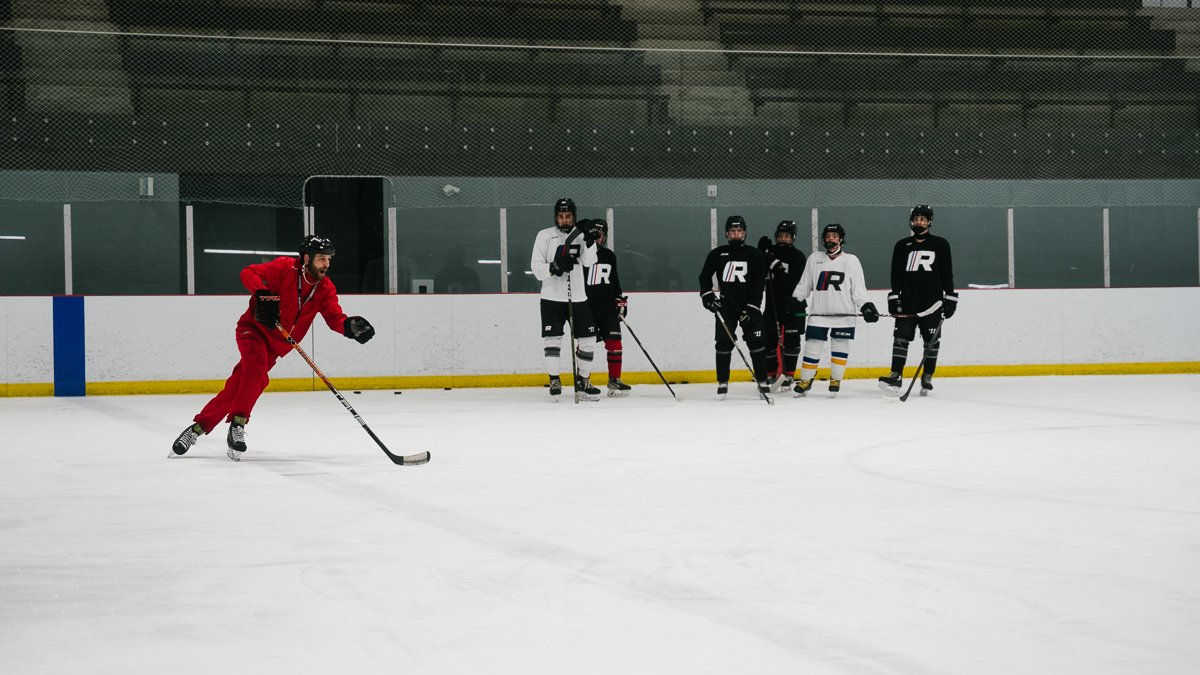
"Something that we focus on a lot at the RINK is edge engagement," Oster said. "We want our kids to be able to find that edge as quick as possible. Just being able to get to that edge is really a big problem for some guys. And we also do a lot of work with guys on perfecting their flat — or their glide."
"If you look at the fastest skaters like in the NHL, they all skate differently, right? Nathan MacKinnon doesn't skate like Connor McDavid, and McDavid doesn't skate like anyone else. The one thing that those guys all have in common though is a tremendous glide. So, being able to get up to speed and maintain speed is something that we really focus on, especially with the junior guys out there."
Fewer Topics, More Reps
Having just finished an exceptionally successful nine-man summer speed series, Oster was blown away with the attentiveness of his students and their overall willingness to learn and improve on the daily.
"It was an eight-week program with lots of power skating, and we had the perfect group to do it with," he said. "To tell you the truth, over that whole time, we really only touched on about three topics. It was quickness out of your starts — so, some staggered starts, which is just a straight start. And then we focused on quickness out of a crossover start. And finally, quickness out of turns. So, those were basically our three topics that we rolled through this spring."
"A big focus for us is to lessen the topics, and go through them with more repetitions, especially at the higher levels," Oster added. "And that's across the board, even when we are working with the younger kids. In the winter power skating, I think we had seven or eight topics in a 19-week program. Anybody can just rip through topics. But it's kind of gimmicky in a certain way; just because you're going through a bunch of different stuff, it doesn't necessarily mean that you're going to get faster. Again, the focus is less topics, more reps and really getting guys feeling comfortable in some of the more technical sides of things."
The Figure Skating Component
Working alongside Oster is Parker and Derraugh, who have helped open not only his mind, but the minds of the majority of his power skating camp attendees to the importance of training with other skating disciplines.
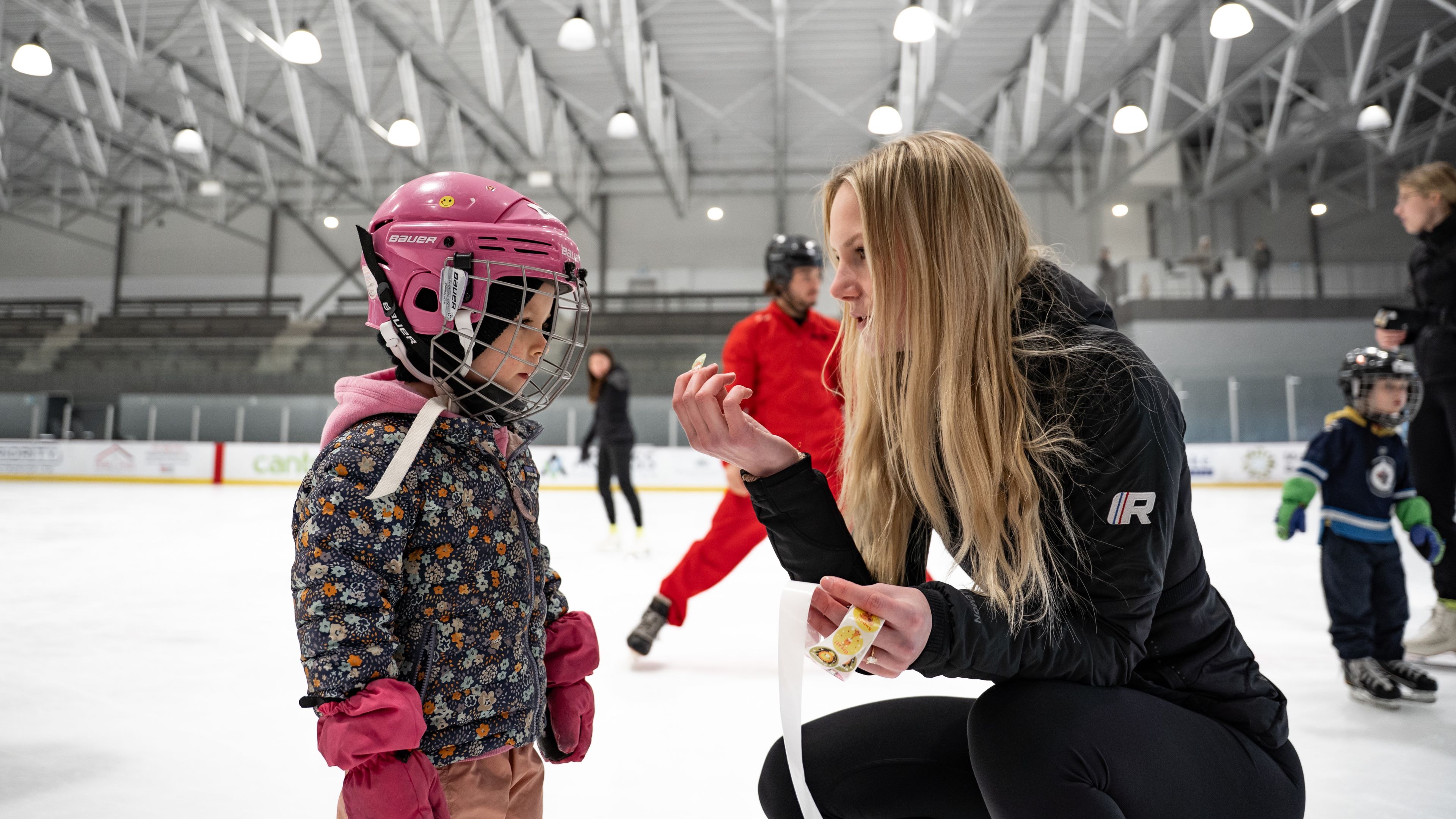
"Brooklyn has been a huge part of what we've run with that added figure skating component the past two years together," he said. "It's got to be one of the best things we've added to the program and a whole different voice. It's different, but I think it really shows hockey players just how far away we are from being great skaters, if that makes sense. It makes me laugh every now and then, because the type of stuff she does — as basic as it seems — she'll blow the hockey players out of the water, and man is it humbling. These guys are all 200-pound guys that live in the gym and they get waxed by her because of how efficient she is on her edges. And I love it. Nothing shows you more than that."
Adding Speed Skating to the Mix
RINK Winnipeg has also implemented a rudiments of speed skating aspect to its offerings, to which Derraugh has shined equally bright.
"So now there is a third component with speed skating," he said. "Reece joined us from Speed Skating Manitoba and has made an impact right away. So, if a kid comes in wanting to get faster, why wouldn't he or she take some knowledge from a speed skater who is trained? Much like Brooklyn and the figure skating, this is a whole different way of teaching and training, and I sure as heck wouldn't have learned lots of what I know now without being out on the ice with people like that."